

You Are Not Alone: Isolation, Seniors, and the Power of Peer Support

For many people living with ME and Long COVID, one of the hardest parts of the illness isn’t a symptom you can point to on a chart. It’s the silence of a world that has stopped including you, where contact fades, and life can become something you watch from a distance.
These illnesses can shrink a person’s world. Post-exertional malaise, profound fatigue, and unpredictable energy strip away work, friendships, family gatherings, hobbies, and community. What’s left for many is isolation.
This isn’t a side issue. Across our community, social isolation and loss of connection consistently rank among the most devastating impacts of these conditions, as significant as the physical symptoms themselves.
For seniors, the isolation runs deeper
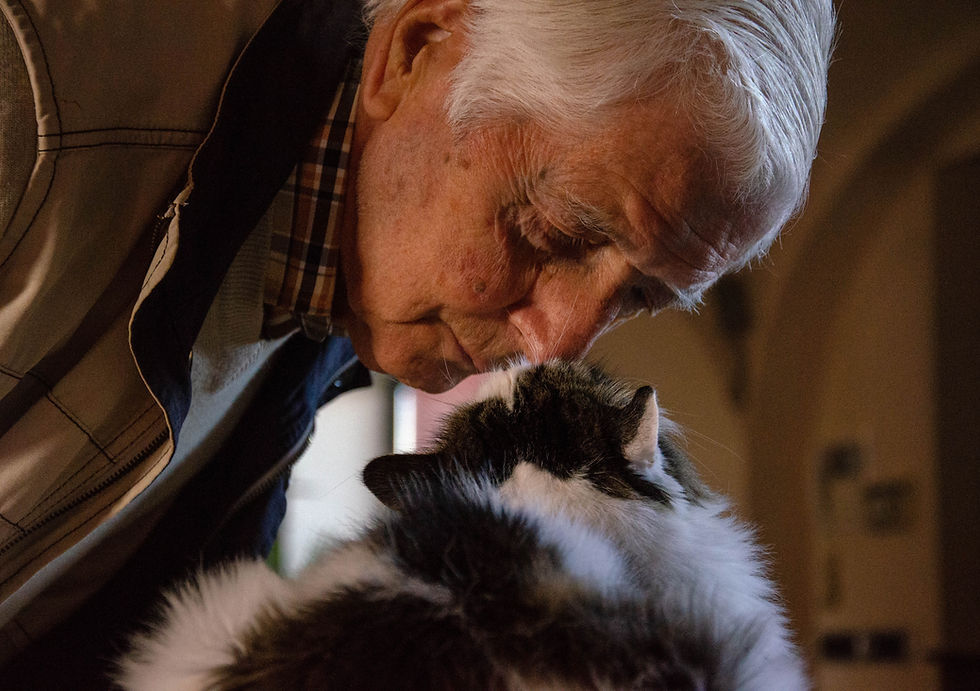
Older adults already face a heightened risk of isolation and loneliness. Social networks narrow with age, mobility can decline, and friends and partners may be lost along the way. Layer a poorly understood, energy-limiting illness on top of that, and the risk compounds.
A senior who can no longer leave home, who tires after a single conversation, and whose illness is too often met with confusion or disbelief can find themselves almost entirely cut off — not just from healthcare, but from the human connection that makes life feel worth living.
What our survey respondents told us
In our 2025 community survey of British Columbians living with ME, FM, Long COVID, and Lyme, we did not ask specifically about social support groups. And yet the theme surfaced repeatedly, unprompted, which speaks to how central it is to people’s lives.
Seniors in our survey were direct about what this illness does to them.
One described one of the biggest impacts of the illness simply as “isolation and loneliness.”
Another, reflecting on what helps, said that being able to meet with other patients is “absolutely crucial for… maintaining mental health,” and that they find “having access to… people with similar diagnoses to be crucial for information but also so [we] don’t feel alone.”
And one senior, who named the absence of support for basic living needs as their primary struggle, said that after that, the worst part of the illness is “the total lack of ability to meet social needs and reduce loneliness.”
Peer support: named as essential, not optional
This need wasn’t unique to our senior respondents. Across the survey, people pointed to peer support groups not as a pleasant extra, but as a core part of surviving and living with these illnesses.
As one respondent put it:
“Without the support group that I formed with other patients…, I would be much worse off. Organized peer-led support groups and programs would be an essential element in a well-rounded range of options for people with these illnesses.”
Another wrote:
“Having more support groups and community-based offerings for those of us with these illnesses would be a really beneficial part of the medical programs. The doctors can only do so much, but these illnesses are extremely limiting, and we are very much alone in our homes and left without much community.”
And when describing what peer support offers, one respondent pointed to something medicine alone can’t prescribe: “social connection and purpose/structure.”
Why connection is part of care
Peer support groups do something no single appointment can. They reduce isolation. They build community among people who truly understand. They pass along hard-won knowledge and lived experience — practical, validating, and grounded in reality. And they remind people, especially those who spend their days alone at home, that they are not the only ones.
None of this replaces medical care. Our respondents were clear that they also need knowledgeable doctors, accurate diagnoses, and ongoing one-on-one treatment. But peer support fills a gap that the medical system, on its own, was never designed to address — and for people who are housebound, exhausted, and cut off, that gap can be the difference between merely enduring and genuinely living.
Why this matters
For people living with ME and Long COVID, maybe especially seniors, connection isn’t a luxury. It’s a lifeline. People living with these illnesses deserve the reduced fear and the sense of safety that comes from being with others who truly get it. Seniors, who so often carry this illness in compounding isolation, may deserve that most of all.
Peer-led social support deserves to be recognized, supported, and resourced as an essential element of a well-rounded range of care options. The voices in our survey made that plain — even in a survey that wasn’t designed to ask.
If you’re living with ME or Long COVID and feeling alone, you don’t have to be. Learn more about connecting with others in our community → here.
Comments